Rabu, 20 April 2011

T-Mobile G2x by LG


Sometimes, a smartphone seems to have it all: good looks, serious speed, stability and a solid software bundle. The T-Mobile G2x by LG is one of those smartphones. It’s an elegant and well made Android superphone with a striking IPS display, dual core Tegra 2 CPU, 8 megapixel camera that shoots 1080p video and 4G HSPA+.  Sounds great, but specs don’t tell the whole story; the Motorola Atrix, an Android phone with a Tegra 2 dual core CPU, slightly higher resolution display and HSPA+ also sounded superb on paper. It was a good phone but it lacked T-Mobile’s faster HSPA+ network, used standard LCD technology and it reeked of plastics. The Atrix was by no means a bad phone, but despite the hype, it’s not quite the phone the LG G2x (aka Optimus 2x overseas) is… that is unless you’re captivated by its nifty but expensive accessories like the Lapdock.
T-Mobile LG G2x

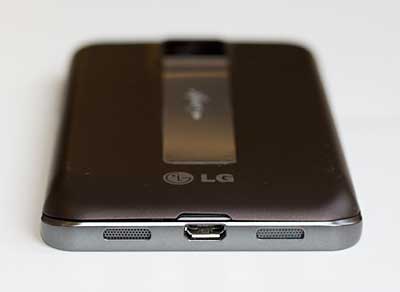
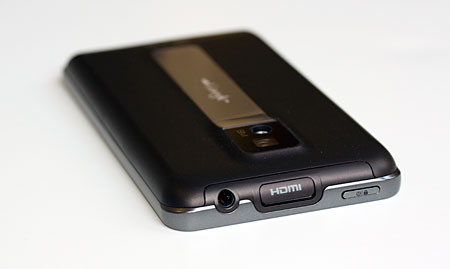
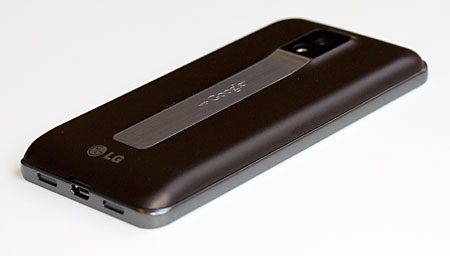
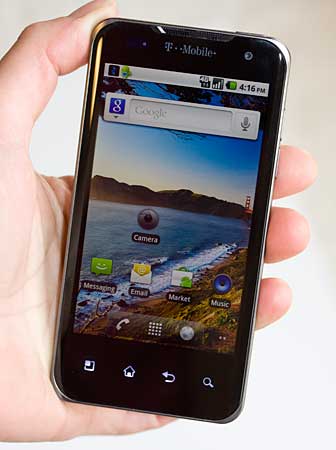
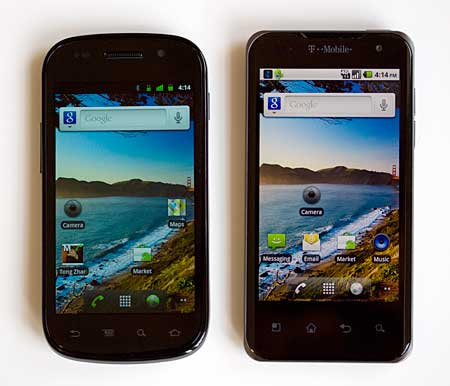
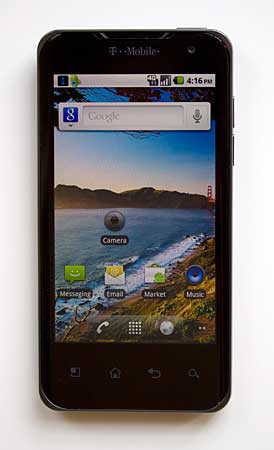
The LG G2x makes an excellent first impression: it looks like a quality phone with judicious use of metals and plastics that look like metal and feature complex curves. It looks like one of HTC’s better offerings, but with a less ardently masculine feel. The soft touch finish on the back feels good and makes the phone easier to keep in hand, and is a step up from the gloss black plastics used in the Samsung Vibrantand Nexus S Android smartphones. The bright and colorful 4”, 800 x 480 display dominates, and is the sweet spot for resolution relative to display size. The 5 ounce G2x (according to the specs, but 5.4 ounces according to our digital scale), has enough heft to feel like a quality piece in hand without being too heavy. The power button is up top where it belongs rather than on the side where it’s too easy to accidentally press like Samsung’s high end Android phones. It has micro HDMI out and a sexy metal strip on the back. Sweet.

Horsepower, OS and Battery Life
Even better, it runs standard Android 2.2 Froyo with no software overlays for slow-downs or UI bells and whistles you might not appreciate.  Since it’s stock Android, it’s also very stable, and battery life is surprisingly good. The phone just works, and works well at that, with no lags, serious quirks or problems. Call quality and reception are good, and 4G speeds are double what we’ve seen with T-Mobile’s 3G smartphones and AT&T’s 3G and 4G HSPA+ smartphones.

The T-Mobile G2x runs on a 1GHz Nvidia Tegra 2 dual core CPU with graphics acceleration, and it’s a fast phone.  It benchmarks at 2551 on Quadrant, and only the Atrix with the same CPU gets similar results. Other higher end Android phones benchmark from 950 to 1700 in Quadrant which tests the CPU, memory, 2D and 3D graphics. The single core 1GHz Nexus S benchmarks at 1648 while the myTouch 4G achieves one of the highest single core results with a 1796. The G2x feels every bit as fast as the speedy pure Google 2.3  Nexus S when navigating the UI, and it feels a bit faster than the myTouch 4G.
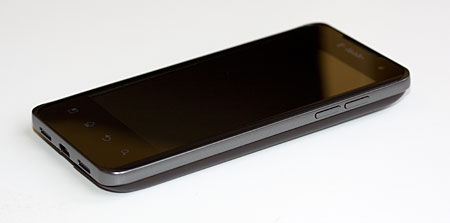
T-Mobile LG G2x


 Battery life usually suffers with a large display and fast CPU weighing it down, but the G2x’s 1500 mAh Lithium Ion battery has surprisingly good stamina.  It had no trouble lasting through the day with moderate use that included plenty of web browsing, scheduled email checks and 30 minutes of streaming video using Flash Player 10.2. Speaking of Flash, playback performance was good with none of the usual slowdowns and poor frame rates we’ve seen on single core phones. Demanding 3D games likewise play very smoothly (see our video review).

T-Mobile LG G2x


The phone has 8 gigs of internal storage with approximately 5.5 gigs listed as available. There’s a microSD card slot as well (take that, Nexus S) but no card is included. The G2x has ~ 1.3 gigs partitioned for application installation (more than enough and more than average for an Android smartphone). The phone has 512 megs of RAM to run programs and the OS, and that’s a reasonable amount since the T-Mobile G2x doesn’t have to support a custom UI as do HTC Sense Android phones, Motorola’s MOTOBLUR phones and Samsung’s TouchWiz phones.

Video Review
Here's our 15 minute T-Mobile LG G2x video review:
Phone and Data
The T-Mobile G2x is a quad band GSM world phone with 3G and 4G HSPA+ on T-Mobile's bands (T-Mobile's webpage incorrectly lists it as quad band 3G/4G). Call quality is good with clear voice on both ends and sufficient voice quality and noise canceling for outdoor calling. The speakerphone is quite loud and clear for both calls and multimedia. Reception is average and is similar to our Nexus S and Sidekick 4G. We had no trouble pairing with and using a variety of Bluetooth headsets and the phone worked well with our 2011 BMW's built-in Bluetooth car kit including address book transfer and advanced calling features.

Data speeds on T-Mobile’s 4G HSPA+ are excellent and are second only to Verizon’s LTE 4G network (to be fair, Verizon’s LTE network also has far fewer users since there are no LTE phones, only data sticks as of this writing). We averaged 5.5 megs down and 900k up on Ookla’ Speedtest.net app with a moderate -95 db signal. Market apps and updates download very quickly, Google Maps data won’t keep you waiting and web pages load quickly (also thanks to the fast CPU that improves web page rendering times). The G2x’s download speeds are similar to other T-Mobile 4G phones like the myTouch 4G and Sidekick 4G, and faster than the 3G Nexus S which averages 2.5 megs down in the same location.

The G2x can act as a WiFi hotspot that shares its wireless data connection with laptops, iPads and other devices. It also supports USB tethering. Download speeds using the LG as a wireless AP were good at 4.5 megs down (slightly slower than the phone itself) and 900k up. Samsung still has the edge for WiFi tethering with even faster download speeds: the Sidekick 4G managed 5.3 megs down using the same notebook in the same location. The G2x also supports WiFi calling, which means you can use a WiFi network to place a call if your cellular signal is marginal (calls still count against plan minutes).
T-Mobile LG G2x
The Nexus S and G2x.
Software
Since this is a pure Google experience phone, you get all the usual Google apps including Maps, Navigation, YouTube, Gmail, email, Market, Gtalk, search, Voice Dialer, Voice Search and News and Weather. The phone is upgradable to Android OS 2.3 Gingerbread, and we don’t foresee anything holding that up for ages since this is a standard Google phone.

LG and T-Mobile include Polaris Office which can read, edit and create MS Word, Excel and PowerPoint files, Swype, and SmartShare for dLNA home WiFi network media streaming. T-Mobile includes T-Mobile TV powered by MobiTV, a $10/month on-demand and live TV streaming that includes full TV show episodes. It worked well in our tests over T-Mobile’s 4G network. TeleNav is also on board for spoken navigation (also $10/month), as is the Zinio magazine reader. For video chat with the 1.3MP front-facing camera, T-Mobile bundles the usual Qik app and there’s WiFi calling and WiFi Mobile Hotspot and USB tethering for using the G2x as a high speed wireless modem. Since this is a powerful phone with an Nvidia CPU and GPU, Nvidia’s Tegra 2 Zone app is here for browsing the latest Tegra 2 optimized games and news. Need for Speed Shift, Asphalt 5 and N.O.V.A. are pre-installed for your gaming pleasure.

 G2x Cameras, x2
The LG has a main rear 8 megapixel autofocus camera with LED flash and a front-facing 1.3 megapixel camera. The front camera produced good looking video in Qik, though outgoing Qik call volume was low. We had to speak loudly and angle the phone with the mic (button edge of the phone) toward our mouth to be easily understood. We hope that a Qik update increases mic gain since this doesn’t seem to be a problem with the phone itself—calls over the cellular and WiFi calling network have perfectly normal outgoing volume.


The main camera can shoot 1080p video in 3gp format. That’s not a very high quality format, and as a result we could see some blockiness in small detail areas like tree leaves. Colors are excellent and exposure is good, and frame rates are solid. Overall the video looks good and is a step up from the iPhone 4 for amount of detail, but falls short of Nokia’s N8 (nothing can compete with the N8’s camera). It’s still rare to find a phone that can shoot 1080p video, so LG gets a thumbs-up on that front.

Still images are sharp, very colorful and well-exposed. There’s some bias towards yellows and a tendency to overexpose indoors shots when the flash is set to auto with close-range subjects, but overall, we like the camera quite well. It takes better shots than HTC’s recent offers such as the T-Mobile G2 and HTC Inspire 4G, and slightly better shots than the Samsung Nexus S (Samsung has some nice cameras in their high end phones).  As an imaging phone, the LG is a solid choice.

Conclusion
The T-Mobile G2x by LG has quickly become one of our favorite smartphones, and I can easily see it replacing my personal Nexus S. While LG phones in the US have been low to mid-tier plastic phones that didn’t inspire gadget lust, the G2x is an over the top smartphone that combines quality materials, great looks, 4G speeds, stability and dual core speed into the competitive $199 with contract space. We’d recommend this phone to anyone looking for a fast and clean Google experience on a high end Android smartphone. The dual core CPU, 4G, excellent IPS display and 1080p camera plus video chat camera offer a reasonable dose of future-proofing as well. Well done, LG. The only trendy feature not found here is 3D, and for our money we haven't seen a 3D handset that really made us wish we had that feature.

Pro: Excellent looks and build materials, fast phone in terms of CPU speed and data speeds, very lovely IPS display, good call quality, has HDMI out, WiFi Calling and solid GPS. Very good battery life for a powerful smartphone.
Con: When we find it we'll tell you.
Price: $199 with contract, $499 without contract


Specs:
Display: 4" IPS capacitive multi-touch display. Resolution: 800 x 480, supports both portrait and landscape modes via accelerometer. Has an ambient light sensor and proximity sensor.
Battery: Lithium Ion rechargeable. Battery is user replaceable. 1500 mAh.
Performance: Dual core Nvidia Tegra 2 CPU. 512 megs RAM, 8 gigs internal storage (5.5 gigs available) with 1.3 gigs reserved for application installations.
Size: 4.88 x 2.48 x 0.43 inches. Weight: 5 ounces.
Phone: GSM quad band world phone with 3G and 4G HSPA+ on T-Mobile's 1700/2100MHz bands. Can act as a mobile WiFi hotspot and supports USB tethering.
Camera: 1.3MP front video chat camera and 8 megapixel autofocus rear camera with LED flash. Rear camera can shoot 1080p video.
Audio and Video: Built in speaker, mic and 3.5mm standard stereo headphone jack. Has a micro HDMI port (cable not included).
Networking: Integrated WiFi 802.11b/g/n and Bluetooth 2.1 + EDR with A2DP.
Software: Android OS 2.2 Froyo (upgradeable to 2.3 Gingerbread). Standard suite of Google apps including Maps, Navigation, Gmail, Market, YouTube and News and Weather. Other software: Adobe Flash Player 10.2, Swype, Polaris Office, T-Mobile TV, TeleNav, Need for Speed Shift, Asphalt 5,N.O.V.A., WiFi Calling, TegraZone Games, Zinio, Twitter and Facebook.
Expansion: 1 SDHC microSD card slot (no card included).

HTC Thunderbolt


The HTC Thunderbolt is in some ways Verizon’s answer to Sprint’s HTC EVO 4G that made a huge splash last year. In fact, the EVO is still going strong today, and that’s why other carriers have joined in with similar phones like the HTC Inspire 4G from AT&T and now the Thunderbolt. The HTC Thunderbolt has a trump card that leapfrogs this otherwise “we’ve seen this sort of thing before” smartphone ahead of the pack: LTE 4G. With the power not only of Verizon’s much lauded network behind it, but LTE too, we’ve got an insanely fast phone for all things Internet. LTE 4G is the fastest form of 4G currently available, and it blows away even T-Mobile’s otherwise respectable HSPA+ 4G network in terms of download and upload speeds. It beats WiMAX as well and is more than 4x faster in our tests.

HTC Thunderbolt

The HTC Thunderbolt is one of the big boys that use HTC’s successful 4.3” display and slim form factor. This pocket-stretching phone packs a second generation single core 1GHz Snapdragon CPU (vs. the first gen CPU in the EVO 4G), plenty of RAM, a 32 gig microSD card and a sharp 8 megapixel shooter. It outdoes the Inspire 4G on AT&T by adding a front-facing video chat camera, and its 4G speeds are currently 4 to 8 times faster than AT&T’s fledgling HSPA+. So is the Thunderbolt the top dog Android phone? For the moment, it and the dual coreMotorola Atrix 4G on AT&T are the most impressive and cutting edge, though Sprint will be fighting back with the HTC EVO 3D this summer. The 4.3” EVO 3D (due out summer 2011) will have a glass-less 3D display (a dubious feature) and a dual core Qualcomm CPU as well as 3Dvideo recording.

The Thunderbolt is a good looking phone, as are all HTC phones using this design (HD2, HD7, EVO 4G and Inspire 4G). The casing is made of plastic that might fool you into thinking it’s brushed metal, and it feels great in hand. The Thunderbolt isn’t a super-slim phone but the back curves do have a slimming effect and make it more comfortable to hold.

HTC Thunderbolt


Controls are logically placed; with the power button and headphone jack up top and the volume controls on the upper right side. The micro USB charging and syncing port is on the lower left side, and thus can’t be used when the kickstand is deployed for landscape viewing. The kickstand is solid with none of the disconcerting wobble we noted in the HD7 and the metal is thicker too. Thanks to the large 4.3” display, the Thunderbolt makes a nice mobile video player with the kickstand deployed.

HTC Thunderbolt


The large earpiece has rounded and smooth edges and didn’t dig into our ear when talking on the phone (a complaint we had about the Inspire 4G). The loudspeaker fires from the rear and it lives under the kickstand. Volume and clarity are good even when the kickstand is closed and covers the speaker.
The display is sharp and colorful, though it lacks the wow factor of Samsung’s Super AMOLED displays. It’s nonetheless a good quality display with good color saturation and brightness (and much better than the T-Mobile HTC HD7’s).  The bad news is that it fades quite a bit outdoors and we found it nearly impossible to see in direct sunlight.

The single core second generation Qualcomm Snapdragon puts on a good show: it might not touch the Nvidia Tegra 2 dual core CPU used in the Motorola Atrix and recent Android tablets, but it’s much faster than previous Android phones, including those with first gen Snapdragon CPUs. Our review unit scored 1845 on Quadrant benchmark application compared to 2481 on the Atrix, 1714 on the Inspire 4G, 1255 for the EVO 4G running Froyo and 1127 for the Droid X. 

With 768 megs of RAM Android and HTC Sense have plenty of room to breathe, and the phone has 8 gigs of internal storage with approximately 2.4 gigs free (HTC’s ROM restore image uses a great deal of internal storage). Verizon includes a 32 gig microSD card as well. So in terms of performance, the Thunderbolt represents a strong evolutionary step forward for 1GHz single core CPU Android phones. It feels responsive, doesn’t lag and is a pleasure to use.  Even Adobe Flash 10.2 playback is watchable; something we don’t say about slower Android phones.  For those of you who are in love with pure processing power or are looking for a future-proof smartphone, the only thing the Thunderbolt lacks is a dual core CPU.

HTC Thunderbolt

But the real story here is 4G speed. That’s where the Thunderbolt currently blows all other phones away. It’s like being on WiFi, and very good WiFi at that (not slow public WiFi but your home setup if you have a fast access point and a 10Mbps or better broadband connection). In our tests using Ookla’s Speedtest.net app we saw download speeds ranging from 8 to 15Mbps down. Speedtest couldn’t reliably measure our upload speed since it showed a constant 25Mbps up which isn’t likely. When using the Thunderbolt as a WiFi hotspot (it can serve up to 8 clients), we got speeds ranging from 11 to 14Mbps down and 5-6Mbps up using our Windows 7 Acer TimelineX 1830T and 15” MacBook Pro. Sweet! Another bonus is that Verizon’s LTE network runs on the 700MHz band which means strong building penetration.  If you’re not yet in a 4G LTE coverage area, the phone does 3G EV-DO Rev. A just fine, and we got download speeds of 1.5Mbps on Verizon 3G.

Verizon’s LTE network currently handles data only, and phone calls will route over their legacy 1x network. The good news is that you can now make phone calls and use data when you’re in a 4G coverage area. Take that, iPhone 4.  Call quality and volume were better than average on the Thunderbolt, with clear voice on both ends. We did occasionally notice digitized sounding voice when using the (loud!) speakerphone, but voice was natural through the earpiece and Bluetooth headsets.


Video Review
Here's our 13 minute HTC Thunderbolt video review complete with comparisons and application demos.


Multimedia is a pleasure on the Thunderbolt thanks to its fast CPU with Adreno 205 GPU and large display.  We had no problem playing 800 x 480 high bitrate MPEG4 video when we kicked back with the kickstand deployed. Mobile YouTube at HQ looked very good (that’s not hard to manage these days) and Flash video played with very watchable frame rates and reasonable responsiveness to controls. It’s not quite as fluid as dual core Tegra 2 phones and tablets, but it’s a decent experience.

The 8 megapixel main rear camera takes very pleasing photos that have good color accuracy, pleasing but not over-done sharpness and decent exposure. It’s worlds better than the Motorola Atrix 4G’s 5 megapixel camera for both still shots and video. The camera can shoot 720p video at 30fps via the main camera, and it’s good enough for YouTube upload. The Thunderbolt has a front video chat camera but unfortunately doesn’t ship with a video chat application. Skype Mobile with video chat is supposedly coming, and the existing voice-only client won’t run on the Thunderbolt.

Now to the bad news: the HTC Thunderbolt doesn’t have stellar battery life. If you’re a phone junky who reads all the news and leaks, you’ve likely heard about the Thunderbolt’s bumpy road to acceptable battery life and the delays that journey caused. The phone now has bearable battery life (hey, folks manage to live with the EVO 4G), but it won’t run hard all day on 4G without a daytime top-up. If you access email frequently, visit websites often and stream YouTube and Pandora as part of your daily regime, you’ll need to keep a charger handy, get a spare battery or purchase the ungainly extended battery that doubles battery life while giving the smartphone a Quasimodo hump. If you’re in a 3G-only area, the Thunderbolt’s 1400 mAh battery will easily last a full day. The phone doesn’t ship with a way to turn off 4G for those who wish to conserve battery power, but there are utilities and hacks on the Net that can do it.

The HTC has a GPS with aGPS and a digital compass. It worked well with both Google Maps and VZ Navigator X in our tests, though we did note that as with the HTC Inspire, it had trouble getting a fix indoors unless WiFi was turned on (it need not be connected to an access point). The large screen makes for excellent map viewing as long as you keep it out of direct sunlight where it glares and fades.

Conclusion
The HTC Thunderbolt is one of the best smartphones on the market right now. Its incredible 4G LTE speeds and WiFi hotspot sharing feature set it apart, at least for a few months until Verizon releases further 4G smartphones. It's hard to beat HTC's Sense UI for a tasteful and restrained customization of Android that packs a lot of utility; especially for those of you who dislike Samsung's TouchWiz UI and find vanilla Android dull or unfriendly. The Thunderbolt's 4.3" display sets the standard for big screen viewing, even if it's not hyper-saturated like Samsung's Super AMOLED displays, and the 1GHz second gen Snapdragon CPU is more than capable for video playback. As the cliche goes, nothing is perfect, and the Thunderbolt's weak battery life on 4G and single core CPU hurt. Not that the Thunderbolt isn't a very fast and capable phone, but specs still sell products as do promises of future-proof technology and a dual core CPU would have made the Thunderbolt an out of the park home run.

Pro: Extremely fast 4G LTE speeds, large display, elegant design.
Con: Poor battery life on 4G, a dual core CPU would make this phone a clear leader.
Price: $249 with a 2 year contract


Specs:
Display: 4.3" multi-touch capacitive display. Resolution: 800 x 480, supports both portrait and landscape modes. Sensors: proximity, ambient light sensor and g-sensor.
Battery: Lithium Ion rechargeable. Battery is user replaceable. 1400 mAh. 2750 mA extended battery available for purchase.
Performance: 1GHz Qualcomm MSM8655 CPU with Adreno 205 graphics. 768 megs RAM. 8 gigs flash ROM with 2.4 gigs available.
Size: 4.47 x 2.78 x 0.53 inches. Weight: 4.67 ounces.
Phone: CDMA dual band digital with EV-DO Rev. A and LTE 4G on the Verizon's 700MHz band.
Camera: 1.3MP front camera and 8 megapixel rear main camera with dual LED flash that can shoot 720p video.
GPS: GPS with aGPS and digital compass.
Audio: Built in speaker, dual noise-canceling mics, surround sound software and 3.5mm standard stereo headphone jack. Has FM radio.
Networking: Integrated WiFi 802.11b/g/n and Bluetooth 2.1 + EDR.
Software: Android OS 2.2 Froyo with HTC Sense UI and software. Standard Google apps including Google Search, Android Market, Maps and Navigation, Gallery, Gmail, email, YouTube player, Mobile Hotspot and more. Verizon, HTC and third party software: VZ Navigator, Bitbop, VCast Apps, Blockbuster video, Adobe Reader, City ID, Connected Media (DLNA), Flashlight, HTC Friendstream, Let's Golf 2, Quickoffice, Rhapsody, Slacker, TuneWiki, V Cast Media and Kindle.
Expansion: 1 SDHC microSD card slot, 32 gig card included.

HTC Arrive


The HTC Arrive is the first CDMA Windows 7 phone to hit US shores. When Windows Phone 7 started shipping in 2010, Microsoft’s new OS only supported GSM phones, so Sprint and Verizon had to wait for the first OS update (called “no-do”), which added support for CDMA networks. While ‘no-do” has ever so slowly rolled out for existing GSM models, the HTC Arrive ships with that revision which also adds a few features like copy and paste and improved Zune Marketplace search (searching for an app by name no longer brings up scads of song tracks and videos).

HTC Arrive

Solid Hardware
The Arrive joins the LG Quantum (that other keyboarded Windows 7 phone) as a QWERTY landscape slider. The phones are otherwise quite different, while the Quantum on AT&T was a plastic, feature-phone looking beast with a just OK 4 row keyboard, the Arrive looks and feels like a quality piece, and we love the 5 row keyboard with dedicated number row and very standard layout. HTC has a reputation for understated, classy design and solid quality, and that’s what the Arrive delivers.  It employs a pleasing combo of plastics and metal with signature HTC design cues like grille style surfaces that surround the keyboard and display. The hinge is particularly interesting: it’s a unique design that’s unlike the troublesome HTC G2 hinge. Exposed moving parts are kept to a minimum, there’s no play and the phone slides, tilts and locks securely (watch our video review to see it in action).

HTC Arrive


In terms of standard specs, you won’t see anything different here, since manufacturers and carriers have all gone with Microsoft’s fairly decent minimum requirements: a 1GHz Snapdragon CPU, 16 gigs of internal flash storage, a 5 megapixel autofocus camera that can shoot 720p video, WiFi 802.11b/g/n, Bluetooth with A2DP and a GPS. Beyond design, one area where manufacturers do differentiate is the display, but the Arrive doesn’t excite us: the standard 3.6” LCD isn’t horrid but it’s not as sharp as SLCD nor ultra-saturated and bright like Samsung’s Super AMOLED display used on the Windows 7 Samsung Focus. Colors look decent head-on, but fade a bit when viewed from an angle. Text clarity is good, especially since the usual 800 x 480 pixels are packed into 3.6” vs. the 4” on the Focus and 4.3” on the HTC HD7.

HTC Arrive

OS: Same as it Ever Was?
We’re surprised that Microsoft isn’t more aggressive rolling out updates with new features that were sorely lacking in the original WindowsPhone 7 release. Just because Apple got away with it for the first iPhone and iOS 1.0, that doesn’t mean Microsoft can afford to take the same liberties 4 years later. The iPhone was a groundbreaking product with a user experience that was light years ahead of the competition when it released in 2007. Now we have the capable and evolved Android, the ever-impressive though low selling webOS phones and a more mature iOS. With Windows Phone 7 we’re still awaiting multi-tasking and full support for landscape orientation in all apps (particularly for a landscape QWERTY slider like the HTC Arrive). Happily we do get copy and paste, a URL bar in landscape mode when the keyboard is deployed for IE Mobile and a more intelligent Marketplace search.

HTC Arrive

That’s not say we don’t like Windows Phone 7: it’s remarkably easy to use, graphically attractive and the integration with Zune music and videos and XBOX Live is really brilliant. The number of apps in the Marketplace increases weekly, and there are over 10,000 apps, including popular mobile staples like Flixster Movies, Weather Channel, AP Mobile, CNN News, BBC News, ESPN Score Center and a bevvy of XBOX Live games that give the iPhone a run for its gaming money.

The OS is also quick and rarely bogs down. It responds well to touch and multi-touch for pinch zooming and the MS Office suite (read/edit/create) is handy for business users. The MS Exchange support is solid, as you’d expect from a Microsoft product, and it can handle POP email, Gmail and Hotmail.  Facebook integration is pleasing and there are a few Twitter clients to keep you social networking types happy. For those of you who are upgrading from an old Windows Mobile 6.x smartphone, rest assured, Windows Phone 7 is a completely fresh and improved experience that requires no stylus or foot tapping when the phone lags.

Video Review
Here's our 12 minute HTC Arrive video review:

Call and Data

The HTC Arrive has good voice quality with enough incoming call volume to hear your caller when in a moderately noisy location. We heard no background noise and the DSP did an excellent job of filtering out background noise when we called from big box stores and other noisy places.
The phone has 3G EV-DO Rev. A (4G support is MIA in Windows Phone 7). Though there aren’t currently reliable test apps to measure download and upload speeds, experientially, the Arrive feels on par with other Sprint 3G Rev. A smartphones. IE Mobile is much improved over the old Windows Mobile web browser, but its rendering speeds still lag behind Android (#1) and iOS (#2). Pages often don’t appear as they download, and the browser waits until the page download is mostly complete before displaying anything, which makes it feel slower than it is. There’s no Adobe Flash, though Microsoft says it's coming at some point. The phone can play mobile-friendly video formats like YouTube Mobile.

Microsoft has two rules for Windows Phone 7: carriers must offer OS updates once Microsoft makes them available (a carrier can only refuse 1 update) and bloatware is to be kept to a minimum. That means the software experience is largely the same regardless of which Windows 7 phone you purchase. The HTC Arrive ships with HTC Hub (a sub-portal in the Marketplace where you can download a few HTC freebies and get your fill of HTC’s old flip clock + weather screen), TeleNav GPS navigation and Sprint Zone.

Camera and GPS
The 5 megapixel autofocus camera isn’t the Arrive’s best feature. Images tend toward outdoor over-exposure with some color shift indoors in low light (typically magenta), and they’re over-sharpened. The camera reminds us of older HTC 5 MP camera phones before they finally made great strides to improve their phones’ imaging capabilities. It’s not the worst we’ve seen, but the Samsung Focus and HTC Thunderbolt take better shots and video. Max video resolution is 720p with VGA and QVGA options available. The phone has an LED flash and like all Windows 7 phones, a dedicated camera button on the side. You can press and hold the camera button to wake up the phone and take a shot (no need to slide-unlock the home screen first).

The GPS works with the included Telenav and Bing Maps. It should also work with 3rd party solutions as they become available. We had no trouble getting a satellite fix and the phone provided solid turn-by-turn directions.

Conclusion
The HTC Arrive and Samsung Focus are currently our top picks for Windows Phone 7 smartphones. If you’re a Sprint customer who’s been hankering to try out Windows Phone 7, or you’re just loyal to Microsoft’s platform after years of being a Windows Mobile user, the Arrive is for you. It’s well made with HTC’s usual elegant design touches, has a robust hinge for tilted-mode use and call quality is solid. The display might be a little small by today’s mega-screen standards, and we wish it used a more cutting-edge tech, but overall the Arrive is a very good smartphone and Windows Phone 7 is enjoyable to use.

Pro: Top notch design and good build quality. Solid voice phone, Windows Phone 7 is easy and pleasant to use.

Con: Smallish screen of the old-fashioned LCD variety. Windows Phone 7 still waiting for important feature updates like multi-tasking and landscape support in all apps.

Price: $199 with a 2 year contract.

Specs:
Display: 3.6" TFT LCD capacitive display. Resolution: WVGA, 800 x 480. Supports both portrait and landscape modes via accelerometer and keyboard deployment, has ambient light sensor and proximity sensor.
Battery: Lithium Ion rechargeable. Battery is user replaceable. 1500 mAh. Claimed talk time: 6 hours.
Performance: 1GHz Qualcomm Snapdragon QSD8250 processor. 576 megs RAM, 512 megs flash ROM and 16 gigs flash storage.
Size: 4.63 x 2.32 x 0.61 inches. Weight: 6.5 ounces.
Phone: CDMA dual band digital, 3G EV-DO Rev. A.
Camera: 5 megapixel with autofocus lens and LED flash. Can shoot 720p video.
GPS: Has aGPS that works with TeleNav and Bing Maps.
Audio: Built in speaker, mic and 3.5mm standard stereo headphone jack. Voice command software integrated into OS. Has FM radio.
Networking: Integrated WiFi 802.11b/g/n and Bluetooth 2.1 EDR with headset, handsfree and A2DP stereo profiles.
Software: Windows Phone 7 OS. Standard apps include IE, MS Office Mobile, email client, Marketplace, Bing Maps and Search, Zune music and video player, alarms, calculator, XBOX Live Games, People (contacts, Windows Live and Facebook), Pictures and Settings. Sprint software: TeleNav GPS Navigator and Sprint Zone. HTC software: HTC Hub.
Expansion: None.


Related Posts Plugin for WordPress, Blogger...